Let $ R $ be a ring. An element $ a \in R $ is called a quasi-idempotent if there exists a central unit $ k $ in $ R $ such that $ a^2 = ka $. The quasi-idempotent graph of $ R $, denoted by $ G_{Qid}(R) $, is the simple undirected graph with vertex set $ R $ itself, where two distinct vertices $ a $ and $ b $ are adjacent if and only if $ a+b $ is a quasi-idempotent. This paper presents a systematic study of the graph $ G_{Qid}(R) $. We examine its basic structural properties, including connectivity and girth. We introduce a new invariant of the ring, termed the quasi-idempotent sum number, and establish the precise relationship between this invariant and the graph diameter. Furthermore, a complete classification is obtained for all finite commutative rings $ R $ according to the genus of $ G_{Qid}(R) $, thereby characterizing the rings for which this graph has genus $ 0 $, $ 1 $, or $ 2 $.
Citation: Shifeng Luo. Quasi-idempotent graphs of rings[J]. AIMS Mathematics, 2026, 11(2): 3349-3366. doi: 10.3934/math.2026136
Let $ R $ be a ring. An element $ a \in R $ is called a quasi-idempotent if there exists a central unit $ k $ in $ R $ such that $ a^2 = ka $. The quasi-idempotent graph of $ R $, denoted by $ G_{Qid}(R) $, is the simple undirected graph with vertex set $ R $ itself, where two distinct vertices $ a $ and $ b $ are adjacent if and only if $ a+b $ is a quasi-idempotent. This paper presents a systematic study of the graph $ G_{Qid}(R) $. We examine its basic structural properties, including connectivity and girth. We introduce a new invariant of the ring, termed the quasi-idempotent sum number, and establish the precise relationship between this invariant and the graph diameter. Furthermore, a complete classification is obtained for all finite commutative rings $ R $ according to the genus of $ G_{Qid}(R) $, thereby characterizing the rings for which this graph has genus $ 0 $, $ 1 $, or $ 2 $.

| [1] |
I. Beck, Coloring of commutative rings, J. Algebra, 116 (1988), 208–226. https://doi.org/10.1016/0021-8693(88)90202-5 doi: 10.1016/0021-8693(88)90202-5

|
| [2] |
X. Ma, A. Doostabadi, K. Wang, Notes on the diameter of the complement of the power graph of a finite group, Ars Math. Contemp., 25 (2025), 1–10. https://doi.org/10.26493/1855-3974.3026.16a doi: 10.26493/1855-3974.3026.16a
|
| [3] |
D. F. Anderson, A. Badawi, The total graph of a commutative ring, J. Algebra, 320 (2008), 2706–2719. https://doi.org/10.1016/j.jalgebra.2008.06.028 doi: 10.1016/j.jalgebra.2008.06.028
|
| [4] | R. P. Grimaldi, Graphs from rings, In: Proceedings of the Twenty-Second Southeastern Conference on Combinatorics, Graph Theory, and Computing, 1990. |
| [5] |
X. Ma, S. Zahirovic, Y. Lv, Y. She, Forbidden subgraphs in enhanced power graphs of finite groups, Rev. Real Acad. Cienc. Exactas Fis. Nat. Ser. A-Mat., 118 (2024), 110. https://doi.org/10.1007/s13398-024-01611-1 doi: 10.1007/s13398-024-01611-1
|
| [6] | V. Arvind, P. J. Cameron, X. Ma, N. V. Maslova, Aspects of the commuting graph, J. Algebra, 2025, In press. https://doi.org/10.1016/j.jalgebra.2025.07.020 |
| [7] |
H. Su, C. Huang, Finite commutative rings whose line graphs of comaximal graphs have genus at most two, Hacet. J. Math. Stat., 53 (2024), 1075–1084. https://doi.org/10.15672/hujms.1256413 doi: 10.15672/hujms.1256413
|
| [8] |
D. F. Anderson, P. S. Livingston, The zero-divisor graph of a commutative ring, J. Algebra, 217 (1999), 434–447. https://doi.org/10.1006/jabr.1998.7840 doi: 10.1006/jabr.1998.7840
|
| [9] |
N. Ashrafi, H. R. Maimani, M. R. Pournaki, S. Yassemi, Unit graphs associated with rings, Commun. Algebra, 38 (2010), 2851–2871. https://doi.org/10.1080/00927870903095574 doi: 10.1080/00927870903095574
|
| [10] |
H. Su, Y. Zhou, On the girth of the unit graph of a ring, J. Algebra Appl., 13 (2014), 1350082. https://doi.org/10.1142/S0219498813500825 doi: 10.1142/S0219498813500825
|
| [11] |
H. Su, K. Noguchi, Y. Zhou, Finite commutative rings with higher genus unit graphs, J. Algebra Appl., 14 (2015), 1550002. https://doi.org/10.1142/S0219498815500024 doi: 10.1142/S0219498815500024
|
| [12] |
H. Su, L. Yang, Domination number of unit graph of $\mathbb{Z}_{n}$, Discrete Math. Algorithm. Appl., 12 (2020), 2050059. https://doi.org/10.1142/S1793830920500597 doi: 10.1142/S1793830920500597
|
| [13] |
H. Su, G. Tang, When unit graphs are isomorphic to unitary Cayley graphs of rings, J. Algebra Appl., 24 (2025), 2550267. https://doi.org/10.1142/S0219498825502676 doi: 10.1142/S0219498825502676
|
| [14] |
S. Akbari, M. Habibi, A. Majidinya, R. Manaviyat, On the idempotent graph of a ring, J. Algebra Appl., 12 (2013), 1350003. https://doi.org/10.1142/S0219498813500035 doi: 10.1142/S0219498813500035
|
| [15] |
S. Razaghi, S. Sahebi, A graph with respect to idempotents of a ring, J. Algebra Appl., 20 (2021), 2150105. https://doi.org/10.1142/S021949882150105X doi: 10.1142/S021949882150105X
|
| [16] |
G. G. Belsi, S. Kavitha, K. Selvakumar, On the genus of the idempotent graph of a finite commutative ring, Discuss. Math. Gen. Algebra Appl., 41 (2021), 23–24. https://doi.org/10.7151/dmgaa.1347 doi: 10.7151/dmgaa.1347
|
| [17] | P. Sharma, S. Dutta, On idempotent graph of rings, Palest. J. Math., 12 (2023), 883–891. |
| [18] |
A. Patil, D. Patil, Coloring of graph of ring with respect to idempotents, Math. Bohem., 150 (2025), 573–582. https://doi.org/10.21136/MB.2025.0024-24 doi: 10.21136/MB.2025.0024-24
|
| [19] | D. B. West, Introduction to Graph Theory, 2 Eds., Upper Saddle River: Prentice Hall, 2001. |
| [20] | A. T. White, Graphs, Groups and Surfaces, Amsterdam: North-Holland, 1985. |
| [21] | P. J. Cameron, Introduction to Algebra, Oxford: Oxford University Press, 2007. https://doi.org/10.1093/oso/9780198569138.001.0001 |
| [22] | P. J. Cameron, J. H. van Lint, Designs, Graphs, Codes and Their Links, Cambridge: Cambridge University Press, 2010. https://doi.org/10.1017/CBO9780511623714 |
| [23] |
G. Tang, Y. Zhou, Nil $\mathcal{G}$-cleanness and strongly nil $\mathcal{G}$-cleanness of rings, J. Algebra Appl., 21 (2022), 2250077. https://doi.org/10.1142/S0219498822500773 doi: 10.1142/S0219498822500773
|
| [24] |
G. Tang, H. Su, P. Yuan, Quasi-clean rings and strongly quasi-clean rings, Commun. Contemp. Math., 25 (2023), 2150079. https://doi.org/10.1142/S0219199721500796 doi: 10.1142/S0219199721500796
|
| [25] | J. L. Gross, J. Yellen, M. Anderson, Graph Theory and Its Applications, 3 Eds., New York: Chapman and Hall/CRC, 2018. https://doi.org/10.1201/9780429425134 |
| [26] |
C. Thomassen, The graph genus problem is NP-complete, J. Algorithms, 10 (1989), 568–576. https://doi.org/10.1016/0196-6774(89)90006-0 doi: 10.1016/0196-6774(89)90006-0
|
| [27] |
R. A. Duke, G. Haggard, The genus of subgraph of $K_{8}$, Israel J. Math., 11 (1972), 452–455. https://doi.org/10.1007/BF02761469 doi: 10.1007/BF02761469
|
| [28] |
M. R. Khorsandi, S. R. Musawi, On the nonorientable genus of the generalized unit and unitary Cayley graphs of a commutative ring, Algebra Colloq., 29 (2022), 167–180. https://doi.org/10.1142/S100538672200013X doi: 10.1142/S100538672200013X
|
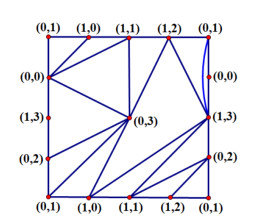
Figures(13)

Shifeng Luo. Quasi-idempotent graphs of rings[J]. AIMS Mathematics, 2026, 11(2): 3349-3366. doi: 10.3934/math.2026136





 DownLoad: