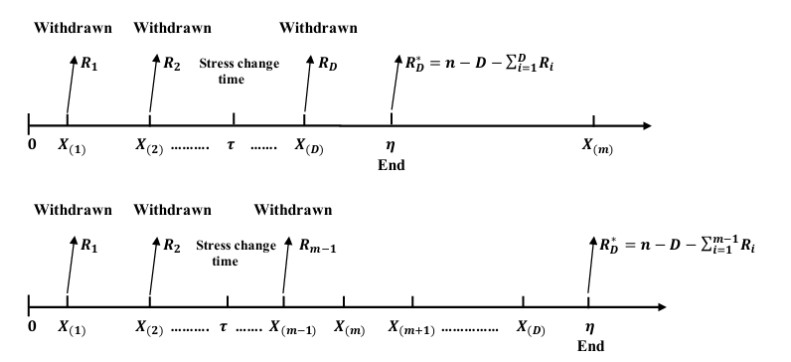
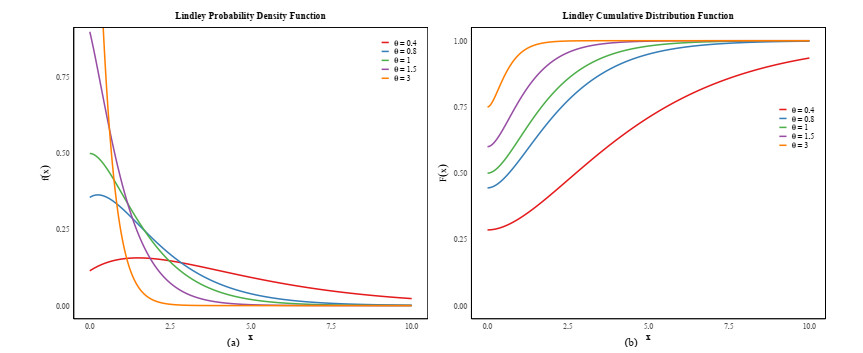
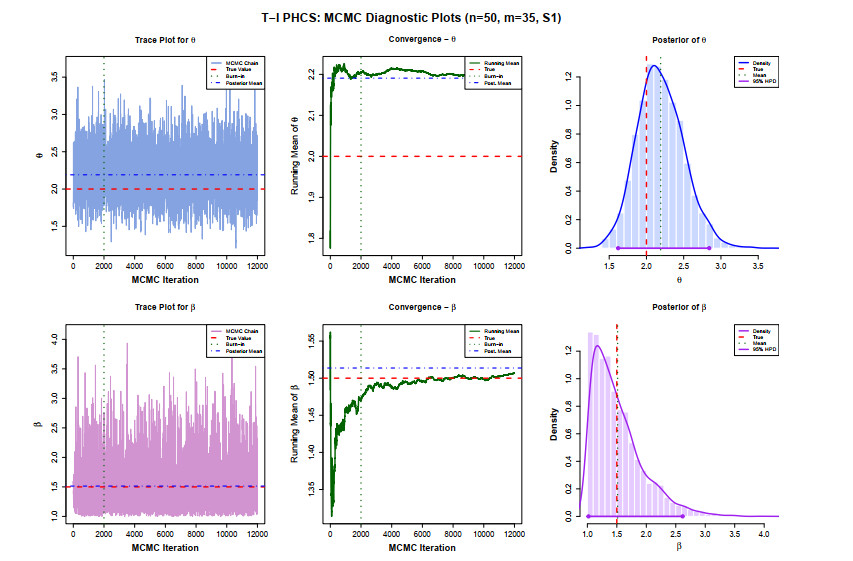
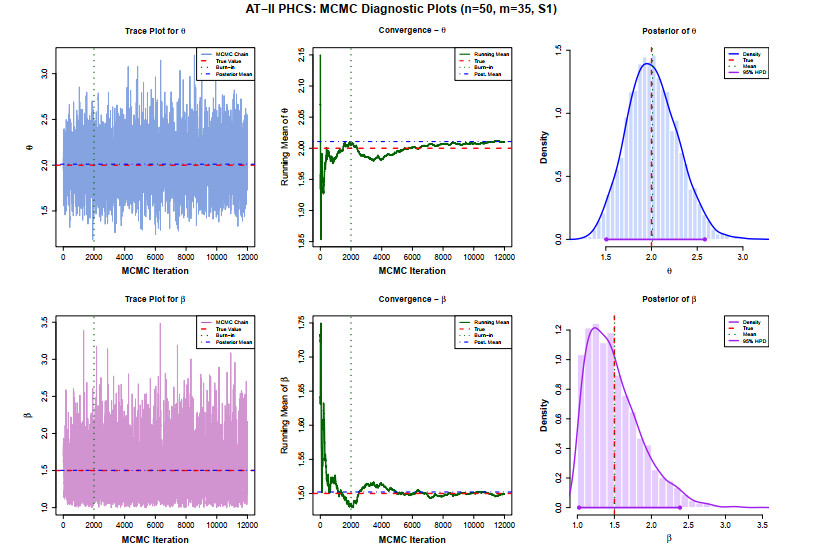
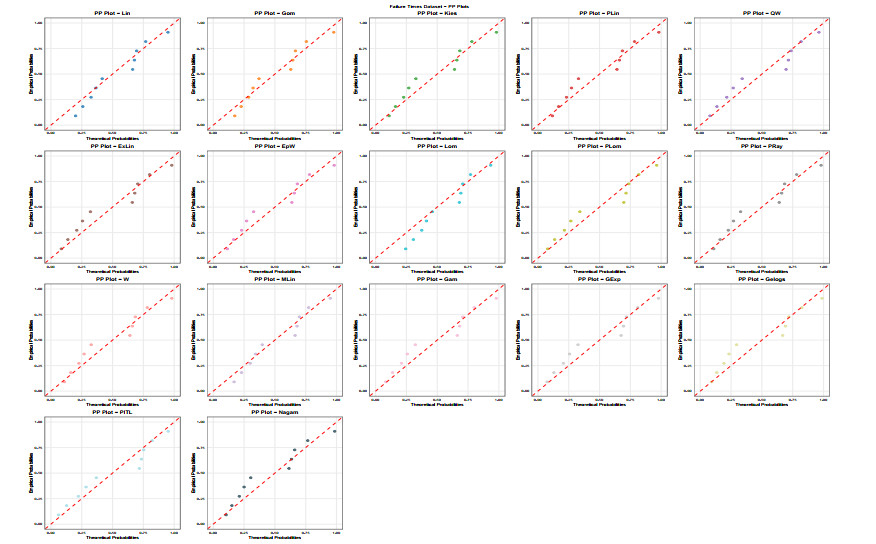
The purpose of this research is to examine the statistical inference for the Lindley distribution using step-stress partially accelerated life testing (SS-PALT) and an adaptive Type I progressive hybrid censoring scheme (AT-I PHCS). To improve the analysis of lifetime observations, the suggested method combines adaptive censoring processes with acceleration mechanisms. Both maximum likelihood and Bayesian approaches are used to estimate the acceleration factor and unknown distribution parameters. The asymptotic properties of the maximum likelihood estimators are derived, upon which approximate confidence intervals are built. In the Bayesian context, estimation is performed under the squared error loss function, while posterior summaries and credible intervals are obtained using Markov chain Monte Carlo (MCMC) methods. An extensive simulation study is carried out to evaluate the performance of the suggested estimators across different censoring schemes and acceleration conditions. Additionally, optimal design considerations are taken into account to determine efficient sampling plans within the SS-PALT setting. The practical relevance of the developed methodology is demonstrated through an application to real data, confirming its effectiveness in fitting lifetime data collected from accelerated experiments. Overall, the findings indicate that the combination of adaptive censoring strategies with partially accelerated life testing can lead to improved estimation accuracy and greater experimental efficiency.
Citation: Mohamed A. T. El-Shahat, Fardous Elsayed, Tmader Alballa, Doaa Basalamah, Said G. Nassr. Inference for the Lindley distribution under partially accelerated life tests with adaptive progressive hybrid censoring[J]. AIMS Mathematics, 2026, 11(7): 23090-23131. doi: 10.3934/math.2026931
The purpose of this research is to examine the statistical inference for the Lindley distribution using step-stress partially accelerated life testing (SS-PALT) and an adaptive Type I progressive hybrid censoring scheme (AT-I PHCS). To improve the analysis of lifetime observations, the suggested method combines adaptive censoring processes with acceleration mechanisms. Both maximum likelihood and Bayesian approaches are used to estimate the acceleration factor and unknown distribution parameters. The asymptotic properties of the maximum likelihood estimators are derived, upon which approximate confidence intervals are built. In the Bayesian context, estimation is performed under the squared error loss function, while posterior summaries and credible intervals are obtained using Markov chain Monte Carlo (MCMC) methods. An extensive simulation study is carried out to evaluate the performance of the suggested estimators across different censoring schemes and acceleration conditions. Additionally, optimal design considerations are taken into account to determine efficient sampling plans within the SS-PALT setting. The practical relevance of the developed methodology is demonstrated through an application to real data, confirming its effectiveness in fitting lifetime data collected from accelerated experiments. Overall, the findings indicate that the combination of adaptive censoring strategies with partially accelerated life testing can lead to improved estimation accuracy and greater experimental efficiency.

| [1] |
B. R. Rao, Equivalence of the tampered random variable and the tampered failure rate models in accelerated lifetesting for a class of life distributions having the 'setting the clock back to zero property', Commun. Stat. Theor. M., 21 (1992), 647–664. https://doi.org/10.1080/03610929208830805 doi: 10.1080/03610929208830805

|
| [2] |
S. Bessler, H. Chernoff, A. W. Marshall, An optimal sequential for step-stress accelerated life test, Technometrics, 4 (1962), 367–379. https://doi.org/10.2307/1266574 doi: 10.2307/1266574
|
| [3] |
H. Chernoff, Optimal accelerated life designs for estimation, Technometrics, 4 (1962), 381–408. https://doi.org/10.2307/1266575 doi: 10.2307/1266575
|
| [4] |
T. Umemura, K. Akiyama, Accelerated life tests of power capacitor dielectric systems, IEEE T. Dielect. El. In., 22 (1987), 309–316. https://doi.org/10.1109/TEI.1987.298996 doi: 10.1109/TEI.1987.298996
|
| [5] |
A. Alrashidi, A. Rabie, A. A. Mahmoud, S. G. Nassr, M. S. A. Mustafa, A. Al Mutairi, et al., Exponentiated gamma constant-stress partially accelerated life tests with unified hybrid censored data: Statistical inferences, Alex. Eng. J., 88 (2024), 268–275. https://doi.org/10.1016/j.aej.2023.12.066 doi: 10.1016/j.aej.2023.12.066
|
| [6] |
T. Figiel, M. Kamiński, Numerical probabilistic approach to sensitivity analysis in a fatigue delamination problem of a two layer composite, Appl. Math. Comput., 209 (2009), 75–90. https://doi.org/10.1016/j.amc.2008.06.039 doi: 10.1016/j.amc.2008.06.039
|
| [7] | A. A. Ismial, The test design and parameter estimation of Pareto lifetime distribution under partially accelerated life tests, Egypt: Cairo University, 2004. |
| [8] | A. A. Ismail, On the optimal design of step-stress partially accelerated life tests for the Gompertz distribution with type I censoring, 2006. |
| [9] |
A. M. Abd-Elfattah, A. S. Hassan, S. G. Nassr, Estimation in step-stress partially accelerated life tests for the Burr type XII distribution using type I censoring, Stat. Methodol., 5 (2008), 502–514. https://doi.org/10.1016/j.stamet.2007.12.001 doi: 10.1016/j.stamet.2007.12.001
|
| [10] | A. M. Abd-Elfattah, E. A ELsherpieny, S. G. Nassr, The Bayesian estimation in step partially accelerated life tests for the Burr type XII parameters using type I censoring, Egypt. Stat. J., 53 (2009), 125–137. |
| [11] |
M. Nassar, S. G. Nassr, S. Dey, Analysis of Burr type-XII distribution under step stress partially accelerated life tests with type-I and adaptive type-II progressively hybrid censoring schemes, Ann. Data Sci., 4 (2017), 227–248. https://doi.org/10.1007/s40745-017-0101-8 doi: 10.1007/s40745-017-0101-8
|
| [12] |
M. M. Yousef, R. Alsultan, S. G. Nassr, Parametric inference on partially accelerated life testing for the inverted Kumaraswamy distribution based on Type-II progressive censoring data, Math. Biosci. Eng., 20 (2023), 1674–1694. https://doi.org/10.3934/mbe.2023076 doi: 10.3934/mbe.2023076
|
| [13] |
B. Epstein, Truncated life-test in exponential case, Ann. Math. Statist., 25 (1954), 555–564. https://doi.org/10.1214/aoms/1177728723 doi: 10.1214/aoms/1177728723
|
| [14] |
N. Balakrishnan, Progressive censoring methodology: an appraisal, Test, 16 (2007), 211–296. https://doi.org/10.1007/s11749-007-0061-y doi: 10.1007/s11749-007-0061-y
|
| [15] | N. Balakrishnan, R. Aggarwala, Progressive censoring: Theory, methods and applications, Boston: Birkhuser, 2000. https://doi.org/10.1007/978-1-4612-1334-5 |
| [16] | N. Balakrishnan, E. Cramer, The art of progressive censoring: Applications to reliability and quality, New York: Birkhauser, 2014. https://doi.org/10.1007/978-0-8176-4807-7 |
| [17] |
D. Kundu, A. Joarder, Analysis of type-II progressively hybrid censored data, Comput. Stat. Data Anal., 50 (2006), 2509–2528. https://doi.org/10.1016/j.csda.2005.05.002 doi: 10.1016/j.csda.2005.05.002
|
| [18] |
N. Balakrishnan, D. Kundu, Hybrid censoring: Models, inferential results and applications, Comput. Stat. Data Anal., 57 (2013), 166–209. https://doi.org/10.1016/j.csda.2012.03.025 doi: 10.1016/j.csda.2012.03.025
|
| [19] |
J. Cai, Y. Shi, B. Liu, Bayesian analysis for Burr-XII masked system in step-stress partially accelerated life test under type-I progressive hybrid censoring, Int. J. Reliab. Qual. Sa., 22 (2015), 1550018. https://doi.org/10.1142/S0218539315500187 doi: 10.1142/S0218539315500187
|
| [20] |
A. A. Ismail, Inference for a step-stress partially accelerated life test model with an adaptive type-II progressively hybrid censored data from Weibull distribution, J. Comput. Appl. Math., 260 (2014), 533–542. https://doi.org/10.1016/j.cam.2013.10.014 doi: 10.1016/j.cam.2013.10.014
|
| [21] |
C. Zhang, Y. Shi, M. Wu, Statistical inference for competing risks model in step-stress partially accelerated life tests with progressively type-I hybrid censored Weibull life data, J. Comput. Appl. Math., 297 (2016), 65–74. https://doi.org/10.1016/j.cam.2015.11.002 doi: 10.1016/j.cam.2015.11.002
|
| [22] | Y. Shi, X. Shi, Estimation and optimal plan in step-stress partially accelerated life test model with progressive hybrid censored data from pareto distribution, J. Phys. Sci., 20 (2015), 53–62. |
| [23] |
H. K. Ng, D. Kundu, P. S. Chan, Statistical analysis of exponential lifetimes under an adaptive type-II progressively censoring scheme, Nav. Res. Log., 56 (2009), 687–698. https://doi.org/10.1002/nav.20371 doi: 10.1002/nav.20371
|
| [24] |
C. T. Lin, Y. L. Huang, On progressive hybrid censored exponential distribution, J. Stat. Comput. Sim., 82 (2012), 689–709. https://doi.org/10.1080/00949655.2010.550581 doi: 10.1080/00949655.2010.550581
|
| [25] |
W. S. Abu El Azm, R. Aldallal, H. M. Aljohani, S. G. Nassr, Estimations of competing lifetime data from inverse Weibull distribution under adaptive progressively hybrid censored, Math. Biosci. Eng., 19 (2022), 6252–6276. https://doi.org/10.3934/mbe.2022292 doi: 10.3934/mbe.2022292
|
| [26] |
S. G. Nassr, O. E. Abo-Kasem, R. H. Khashab, E. Alshawarbeh, S. S. Alshqaq, N. M. Elharoun, Reliability analysis of inverted exponentiated Rayleigh parameters via progressive hybrid censoring data with applications in medical data, Plos One, 20 (2025), e0336169. https://doi.org/10.1371/journal.pone.0336169 doi: 10.1371/journal.pone.0336169
|
| [27] | S. G. Nassr, W. S. Abu El Azm, E. M. Almetwally, Statistical inference for the extended weibull distribution based on adaptive type-II progressive hybrid censored competing risks data, Thail. Statist., 19 (2021), 547–564. |
| [28] |
D. V. Lindley, Fiducial distributions and Bayesian theorem, J. R. Stat. Soc. B, 20 (1958), 102–107. https://doi.org/10.1111/j.2517-6161.1958.tb00278.x doi: 10.1111/j.2517-6161.1958.tb00278.x
|
| [29] |
M. E. Ghitany, B. Atieh, S. Nadarajah, Lindley distribution and its application, Math. comput. simul., 78 (2008), 493–506. https://doi.org/10.1016/j.matcom.2007.06.007 doi: 10.1016/j.matcom.2007.06.007
|
| [30] |
N. Goel, H. Krishna, Estimation in residual lifetime Lindley distribution with type II censored data, Int. J. Syst. Assur. Eng. Manag., 13 (2022), 363–374. https://doi.org/10.1007/s13198-021-01274-w doi: 10.1007/s13198-021-01274-w
|
| [31] |
S. G. Nassr, T. S. Taher, T. Alballa, N. M. Elharoun, Reliability analysis of the Lindley distribution via unified hybrid censoring with applications in medical survival and biological lifetime data, AIMS Math., 10 (2025), 14943–14974. https://doi.org/10.3934/math.2025670 doi: 10.3934/math.2025670
|
| [32] |
S. Shafq, T. S. Helal, R. S. Elshaarawy, S. Nasiru, Study on an extension to Lindley distribution: Statistical properties, estimation and simulation, Comput. J. Math. Stat. Sci., 1 (2022), 1–12. https://doi.org/10.21608/cjmss.2022.2708955 doi: 10.21608/cjmss.2022.2708955
|
| [33] |
N. Saaidia, R. Pakyari, H. Zeghdoudi, The Q-Lindley distribution: Goodness-of-fit tests, modeling, inference, and applications, J. Stat. Theory Appl., 25 (2026), 6. https://doi.org/10.1007/s44199-025-00148-5 doi: 10.1007/s44199-025-00148-5
|
| [34] |
S. Chouia, H. Zeghdoudi, The XLindley distribution: Properties and application, J. Stat. Theory Appl., 20 (2021), 318–327. https://doi.org/10.2991/jsta.d.210607.001 doi: 10.2991/jsta.d.210607.001
|
| [35] |
J. Jia, Z. Yan, X. Peng, The Lindley-Weibull distribution, Acta Math. Appl. Sin. Engl. Ser., 41 (2025), 588–600. https://doi.org/10.1007/s10255-025-0003-z doi: 10.1007/s10255-025-0003-z
|
| [36] |
A. M. Gemeay, A. Ezzebsab, H. Zeghdoudi, T. Caner, Y. A. Tashkandy, M. E. Bakr, et al., The power new XLindley distribution: Statistical inference, fuzzy reliability, and applications, Heliyon, 10 (2024), e36594. https://doi.org/10.1016/j.heliyon.2024.e36594 doi: 10.1016/j.heliyon.2024.e36594
|
| [37] |
A. Beghriche, Y. A. Tashkandy, M. E. Bakr, H. Zeghdoudi, A. M. Gemeay, M. M. Hossain, The inverse XLindley distribution: Properties and application, IEEE Access, 11 (2023), 47272–47281. https://doi.org/10.1109/ACCESS.2023.3271604 doi: 10.1109/ACCESS.2023.3271604
|
| [38] |
A. Ezzebsa, T. Belhamra, H. Zeghdoudi, Square new XLindley distribution: Statistical properties, numerical simulations and applications in sciences, Stat. Optim. Inf. Comput., 15 (2026), 2454–2470. https://doi.org/10.19139/soic-2310-5070-3255 doi: 10.19139/soic-2310-5070-3255
|
| [39] |
S. Nedjar, H. Zeghdoudi, On gamma Lindley distribution: Properties and simulations, J. Comput. Appl. Math., 298 (2016), 167–174. https://doi.org/10.1016/j.cam.2015.11.047 doi: 10.1016/j.cam.2015.11.047
|
| [40] |
N. Saaidia, T. Belhamra, H. Zeghdoudi, On ZLindley distribution: Statistical properties and applications, Stud. Eng. Exact Sci., 5 (2024), 3078–3097. https://doi.org/10.54021/seesv5n1-153 doi: 10.54021/seesv5n1-153
|
| [41] |
A. E. B. A. Ahmad, A. A. Soliman, M. M. Yousef, Bayesian estimation of exponentiated Weibull distribution under partially acceleration life tests, Bull. Malays. Math. Sci. Soc., 39 (2016), 227–244. https://doi.org/10.1007/s40840-015-0170-9 doi: 10.1007/s40840-015-0170-9
|
| [42] | A. Gelman, J. B. Carlin, H. S. Stern, D. B. Rubin, Bayesian data analysis, New York: Chapman and Hall/CRC, 2003. https://doi.org/10.1201/9780429258480 |
| [43] |
S. Geman, D. Geman, Stochastic relaxation, Gibbs distribution, and the Bayesian restoration of images, IEEE T. Pattern. Anal., 6 (1984), 721–741. https://doi.org/10.1109/TPAMI.1984.4767596 doi: 10.1109/TPAMI.1984.4767596
|
| [44] | W. K. Hastings, Monte Carlo sampling methods using Markov chaine and their application, Biometrics, 57 (1970), 97–109. |
| [45] |
N. Metropolis, A. W. Rosenbluth, M. N. Rosenbluth, A. H. Teller, E. Teller, Equations of state calculations by fast computing machines, J. Chem. Phys., 21 (1953), 1087–1092. https://doi.org/10.1063/1.1699114 doi: 10.1063/1.1699114
|
| [46] |
H. M. Barakat, H. Bakouch, M. Abd Elgawad, H. E. Semary, M. A. Alawady, I. A. Husseiny, et al., The modified Muth distribution: Statistical properties, entropy measures, and parameter estimation, AIMS Math., 11 (2026), 6269–6296. https://doi.org/10.3934/math.2026259 doi: 10.3934/math.2026259
|
| [47] | W. R. Gilks, S. Richardson, D. Spiegelhalter, Markov chain Monte Carlo in practice, New York: Chapman & Hall/CRC, 1995. https://doi.org/10.1201/b14835 |
| [48] |
L. Tierney, Markov chains for exploring posterior distributions, Ann. Statist., 22 (1994), 1701–1728. https://doi.org/10.1214/aos/1176325750 doi: 10.1214/aos/1176325750
|
| [49] |
Z. F. Jaheen, Empirical Bayes inference for generalized exponential distribution based on records, Commun. Stat. Theor. M., 33 (2004), 1851–1861. https://doi.org/10.1081/STA-120037445 doi: 10.1081/STA-120037445
|
| [50] |
S. Singh, Y. Tripathi, Estimating the parameters of an inverse Weibull distribution under progressive type-I interval censoring, Stat. Papers, 59 (2018), 21–56. https://doi.org/10.1007/s00362-016-0750-2 doi: 10.1007/s00362-016-0750-2
|
| [51] | D. P. Murthy, M. Xie, R. Jiang, Weibull models, John Wiley & Sons, 2004. |
| [52] |
H. S. Bakouch, F. A. Moala, S. Alghamdi, O. Albalawi, Bayesian methods for step-stress accelerated test under gamma distribution with a useful reparametrization and an industrial data application, Mathematics, 12 (2024), 2747. https://doi.org/10.3390/math12172747 doi: 10.3390/math12172747
|
Figures(9) / Tables(14)

Mohamed A. T. El-Shahat, Fardous Elsayed, Tmader Alballa, Doaa Basalamah, Said G. Nassr. Inference for the Lindley distribution under partially accelerated life tests with adaptive progressive hybrid censoring[J]. AIMS Mathematics, 2026, 11(7): 23090-23131. doi: 10.3934/math.2026931





 DownLoad: